Branding in the age of post-marketing
Time for positioning to get real – and better make it fast.
Guess the year.
“Tuesday morning, 9:30 am. The spider phone beeps in a bunch of sleepy folks from one or more ad agencies and two overly calm number-heads from the Research Agency.
The client is late, but eventually he’ll check in to pinpoint everything that doesn’t meet his lingo.
Eventually, after a wealth of Brand Explorations, Consumer Journeys, Customer Researches, and Creative Proposals, the Executives will decide upon 2/3 Brand Positioning ideas.
So on Thursday on the following week, same time, the client will call the Media Agency to start booking advertising spaces from here to eternity, until the whole world forgets how to even say hello and will only remember the brand’s name in big shiny letters.
And when the campaign is over, here we go again starting all over from scratch.
It feels good to have so much money and time.”
So, what’s your guess: 1998? 2002? 2006?
Wrong.
That’s today in most client offices.
Feels pretty old school doesn’t it?
Truth is, you can talk all you want about the big changes, Millennials, and the brand new branding of brandless brands, but deep down in our cubicles we’re all still a corporation trying to play defensive for as long as we can.
In “All this time”, Sting used to say, “men go crazy in congregations, they only get better one by one”.
And that’s probably true, so here’s one lonely example that paves the way for the rest of us.
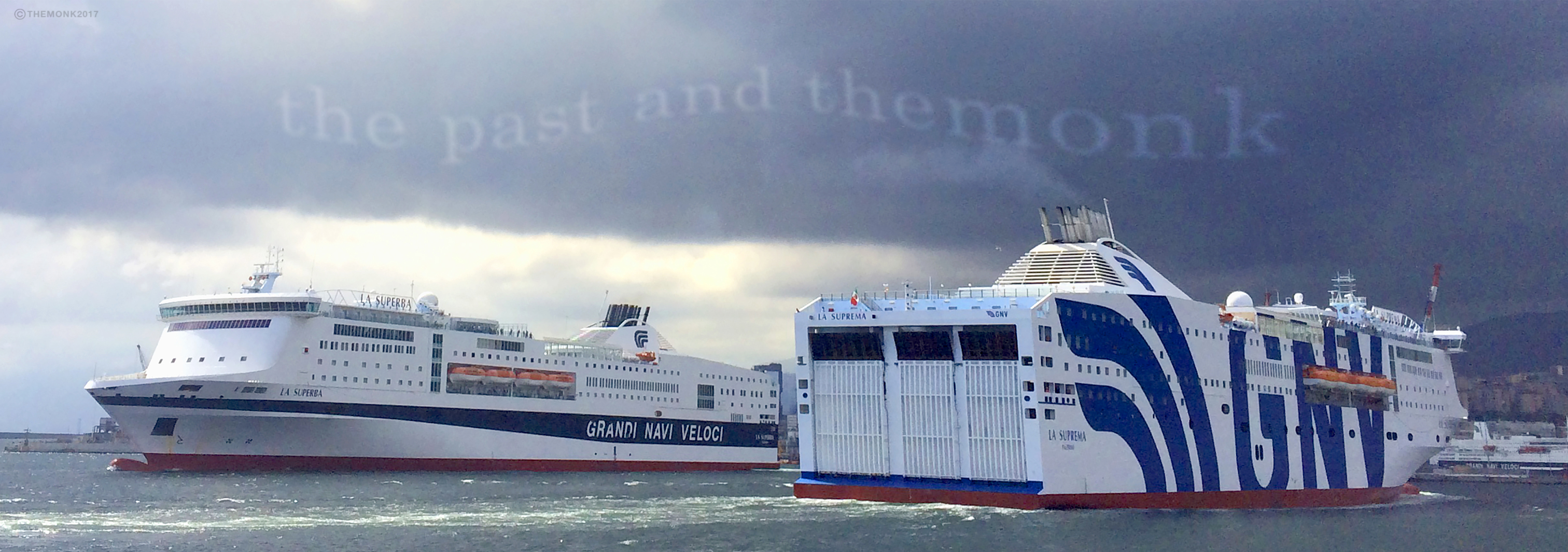
Ferries company Grandi Navi Veloci rebranded itself as GNV a couple of years ago, consistent with an international expansion on the Moroccan, Tunisian, and Albanian market.
Rather than calling a couple of agencies and 3 or 4 directors, they chose to include every department that would be somehow have a stake in the successful positioning of the brand – this way, they got a sounder positioning and they aligned every department on the importance of their self-marketing.
This is paramount when you’re dealing with totally different clients, from German vacationers to business travelers from Morocco.
They got rid of acronyms and “structures”, to focus on people and talent: this allowed for a broader inclusion of opinions and needs, from suppliers to staff and management.
And they moved beyond pitches, since they had a pretty clear idea of the quality they had in mind and, for once, quality shouldn’t be dirt-cheap.
The positioning became an ongoing series of internal trainings touching the most diverse range of topics and skillsets, which continue to date with a strong investment in personal development. Not just phrases that sound nice, then.
Workers from all levels started contributing with brilliant ideas, even in fields outside of their own scope – management is no longer the only one in charge of coming up with stuff.
It’s really happening.
You might still call it “positioning” but first of all it’s a mindset, a way of living, something that doesn’t simply come out of a brainstorming – it requires a degree of creative observation of the reality of each and every branch and corner of the Company, and a willingness to embrace it.
Doing so, the Company is growing ever more conscious of its communication, and above all, communicating has started to become natural for everyone.
The gap is almost gone.
And the future is more open than ever.
Cheers to that!
Walking the talk: By the end of 2015, GNV carried 1.5 million passengers, which became 1.7 millions by the end of 2016.
It was a pleasure to working with them on all this, and much more to come :)
THEMONK