Pimp my donkey. Is perfect positioning just a unicorn?
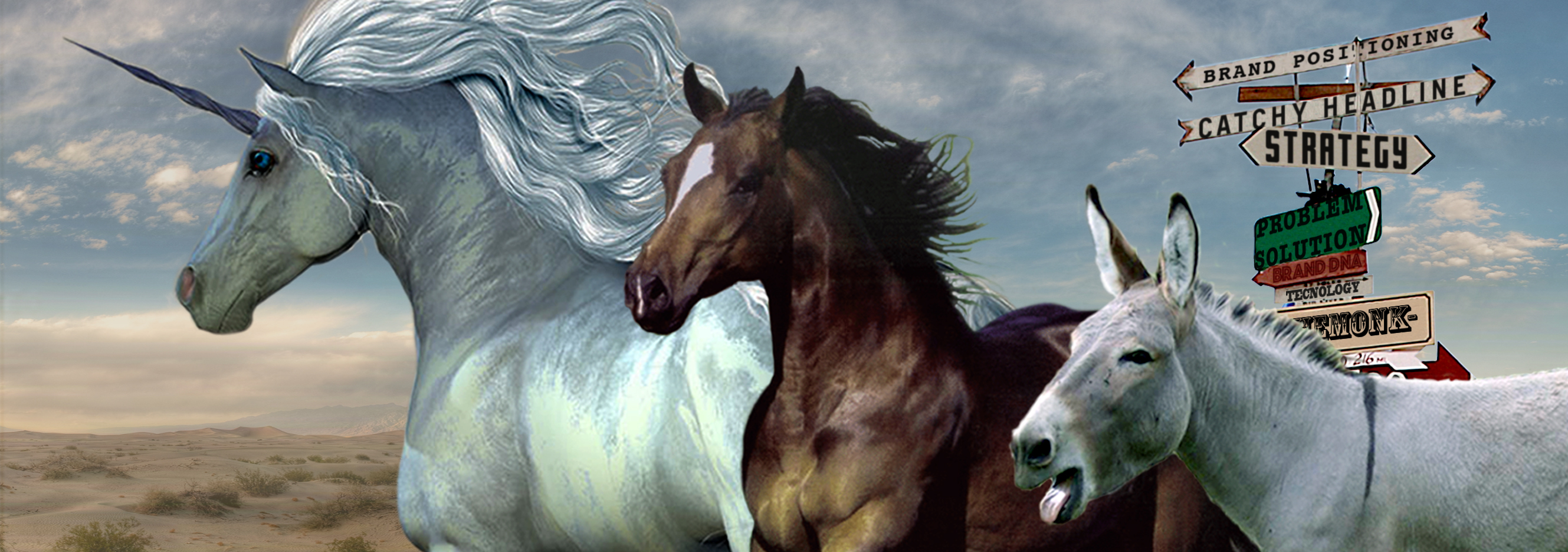
Let’s all be honest, anyone can come up with a good idea for an ad.
Find a catchy line, a funny joke, an unsettling visual, and you have your campaign.
And in most cases, that’s all you need, to feel like you’ve done your job: your billboards are out there, you radio ad is being broadcast and for some arcane reason your banners are getting clicks.
All fine, right? End of the article, is it?
Maybe.
If we were in the 90s. Indeed, up until then, it took a VERY wrong campaign for the public to notice and let you know about it. Simply put, you could have been a “FAIL” and never get to know it.
But now, the world is packed with keyboard warriors eagerly gobbling all sorts of content and spreading their opinion online at the speed of thought. So you know you really can’t risk going wrong. That’s why you cover your buttocks and you start worrying about your entire communication to “make sense”.
So you look for a positioning, a safe harbor to bring all your ideas to when the time to chip in the money comes.
Unfortunately, though, a positioning is something far more complex than an ad; not because it requires tremendous creative brainpower but rather because it requires brutal honesty, from everyone. And it’s not easy to be honest about your product’s flaws and potential after all the work you’ve put in it.
I’ve seen many good positioning statements being trashed by “dreamer” marketers and way too many bad positionings get approved by politics and not by merit.
What I’ve seen most times is the classic unicorn/donkey paradox:
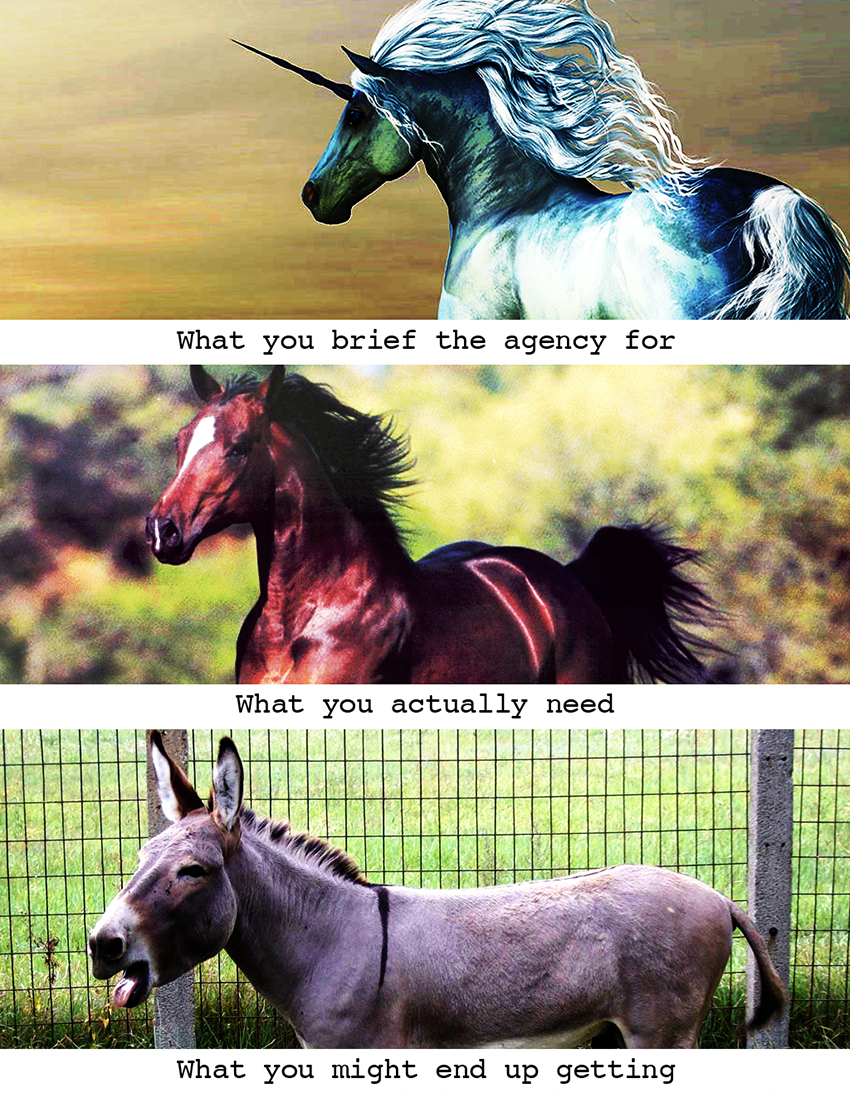
This happens all the time, and it’s no big deal unless people get stubborn.
Before any communication is made, you need to be honest about your product.
We all dream of the perfect, aspirational, dream-like positioning but nobody knows what it looks like. Marketing is about giving people what they didn’t think they needed as if it’s the ultimate solution to the problems they’ve always had.
So what is it that you’re really giving your customers?
Are you a life-changing experience or proudly a very functional and reliable solution to a problem?
Staying true to the reality of your product is not easy, and neither is it straightforward, especially if you’re trying to do it all by yourself with internal resources: you need an external, yet educated guess. A harsh point of view with an idea in mind.
So, if you’re functional, be the best functional brand you can be. If you’re a lifestyle, make that lifestyle a reality even before your product is bought. Speak like you were one of your customers, only with more wit.
Don’t pimp your donkey, just make it the best one in the world.
All in all, even NIKE has some sort of “functional” claim: “just do it”. It started from the reality of their products, and then evolved into a mindset.
As you can tell, it’s a whole lot harder than just writing a catchy headline.
It’s about not being afraid to listen to what people and creatives really think of your product. And then act upon it.
It’s not easy when you’re chasing unicorns, but the truth is, unicorns don’t exist and time spent chasing them with your creatives is money badly spent.
If it’s a horse you need, then, make sure you are one. If you’re not, don’t be afraid to change strategy.
Better be the best donkey than an average horse.
THEMONK